
The Hook
Barcelona
Last week, Williams Racing announced they would not attend the Barcelona shutdown test. The internet did what the internet does - speculation about crash test failures, overweight chassis, a team in crisis.
Then James Vowles, Williams' Team Principal, released a video explaining the decision. What he said was not damage control. It was a philosophy:
"I'm not here to produce a car that's well and truly within the tolerances. We have to push ourselves as a business to breaking point, and we've done so. It's painful, but it means we will never be here again." James Vowles, Williams Racing Team Principal
This is not a story about Formula 1. This is a clinic on transformation - what it actually takes to move an organization from survival mode to genuine contention. I have been watching this story unfold for three seasons, and the parallels to the work I do with executives are too precise to ignore.
The Context
Why This Story
I will admit to some bias here. When Ferrari decided to replace Carlos Sainz with Lewis Hamilton, I was genuinely angry on his behalf. Sainz had delivered consistently, often outperforming his teammate, and Ferrari's decision felt like discarding a proven asset for star power.
I spent the 2025 season watching Sainz at Williams, quietly relishing every race where he outperformed the driver Ferrari kept and the driver who replaced him. But what started as rooting for the underdog became something more interesting: watching a textbook transformation unfold in public.
Williams is one of the most storied names in motorsport. Nine constructors' championships. Seven drivers' titles. But by 2023, they had spent years as backmarkers, fighting for 19th and 20th place, hemorrhaging talent to teams with actual prospects.
What Vowles has built over three seasons is a template for any organization trying to move from firefighting to contention. The Williams story maps directly to the transformation work I do: coming into organizations stuck in survival mode, building infrastructure that does not show immediate results, bringing in talent that raises the ceiling, and creating permission to stress-test before the stakes are existential.
Season One
Survival Mode
When Vowles arrived in 2023, he found a historic team with what he described as "20 years of underinvestment" - particularly in infrastructure and tooling. The emblem of that dysfunction was a single 20,000-cell Excel spreadsheet used to track every part of the car. No reliable view of inventory, costs, or locations. Staff physically hunting for components.
That spreadsheet governed the entire 2024 build. Only weeks before testing, the new car was still effectively "a pile of parts," not a cohesive chassis. When Vowles asked early on about progress on the following year's car, the answer was essentially "nothing" - a culture stuck in short-term firefighting with no multi-year plan.
Season Two
Invisible Infrastructure
Vowles' early decisions focused not on flashy aero upgrades but on rebuilding the foundation. He argued that decades of underinvestment meant the team had to pour scarce resources into basic infrastructure before performance gains were even possible.
That meant accepting painful trade-offs. Urgent system changes contributed to a late, overweight 2024 car. But by 2025, Vowles was describing the new build process as "night and day" - parts and workflows fully mapped rather than buried in Excel.
Tooling modernization became central to this rebuild. Atlassian effectively became Williams' work-management backbone: Jira for car-part tracking and asset management, Confluence for capturing engineering and race knowledge, Loom for internal video documentation. Williams discovered they had 23 different systems being used for personnel data alone - the kind of tech-stack sprawl that many enterprises face.
This phase does not immediately show up in lap time. But it changes the slope of improvement. It is the difference between an organization that can iterate and one that cannot.
Season Three
Raising the Ceiling
With the groundwork laid, Williams moved to add people who could raise the organizational ceiling. One of the most significant steps was hiring veteran engineer Pat Fry as Chief Technical Officer - experience from McLaren, Ferrari, and Alpine. Vowles called Fry "one of the most respected experts in our industry" and positioned him as a cornerstone of Williams' "next chapter."
Internally, Vowles shifted leadership away from siloed blame towards cross-functional problem solving. As performance and direction improved, he noted that Williams was once again an attractive destination - engineers and operators willing to consider the team where they previously would not.
This is the moment when a rebuilding organization starts to attract catalyst hires instead of last-resort candidates.
The Sainz Decision
Carlos Sainz's choice to join Williams is both a result of this transformation and an accelerant of it. When he announced his move, Sainz said he "really believe[s] in the project" and wants to help put Williams "back where it belongs." He emphasized choosing the long-term rebuild over simply chasing the best immediate car.
"I wanted to be the boss of my own destiny rather than waiting on bigger teams." Carlos Sainz
Sainz stressed the trust and belief he felt from Williams, while Vowles publicly described Sainz as the team's "number one target" - a three-time race winner choosing Williams over other options because he believed in the trajectory.
Once inside, Sainz contributed more than just lap time. Vowles has said he valued Sainz for the technical impact he has had at every team since 2015 - bringing a "whole new dimension" in terms of setup discipline, strategic thinking, and quality of feedback.
"Williams has exceeded my expectations - both car performance and what the team is capable of." Carlos Sainz, 2025 Season
The Philosophy
Testing at the Limits
Alongside structure and talent, Vowles reoriented Williams around a clear philosophy: you cannot find the limit without going past it.
He has described consciously moving away from treating every weekend as a must-maximize event, instead using certain races to run uncomfortable tests on setups and concepts - even at the cost of short-term results. He has talked about pushing the organization "to breaking point" in 2024, resulting in only one complete car for Melbourne and intense public scrutiny, yet he expressed "no regrets" because that stress-test forced through changes that underpinned later gains.
Which brings us back to Barcelona.
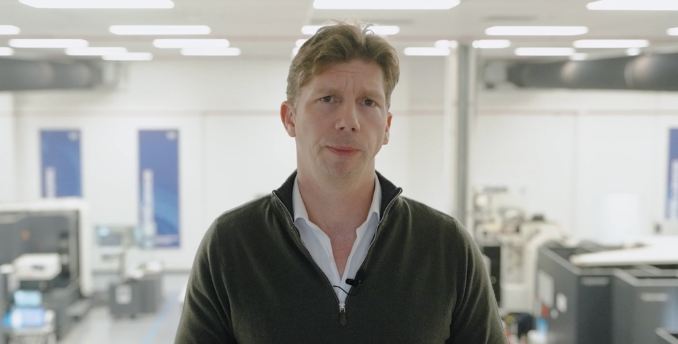
Watch: James Vowles - FW48 Testing Update
The decision to skip Barcelona was not retreat. It was strategy. Vowles framed the entire approach as a deliberate, high-fidelity torture test - an intensive program to harden correlation and reliability so that the race-weekend car is better prepared.
"Could we have pushed all out to be at Barcelona at all costs? Yes. But we would have compromised the rest of the preseason and the bigger picture that we're working towards." James Vowles
Push to breaking point now, when the cost is a test session. Learn what actually breaks. Fix it. Arrive at Bahrain and Melbourne with problems already solved rather than discovering them when points are on the line.
This is controlled failure as competitive advantage - structured risk, in bounded domains, to accelerate learning.
The Application
What Executives Should See
The pre-2023 Williams is what many executives quietly recognize in their own organizations: critical operations run from sprawling spreadsheets, dozens of overlapping systems for basic processes, no clear pipeline for the next product, and a culture stuck in firefighting.
The inflection point is not a single innovation but a structural decision to invest in infrastructure, adopt a unified system of work, and articulate a philosophy that treats controlled failure as a necessary cost of learning.
From there, the organization becomes capable of attracting catalyst talent - people who both validate and accelerate the transformation through their standards and experience. And critically, the willingness to sacrifice some short-term comfort to accelerate learning is a direct analogue to leaders ring-fencing experimental capacity rather than optimizing every quarter.
The through-line is clear: from "we don't even know what we don't know" to a place where world-class operators look at your organization and say "I really believe in this project" - and then make it even better.
The 2026 Question
New regulations reset the competitive order. Williams has spent three seasons building infrastructure, attracting talent, and developing a philosophy of intentional stress-testing. The combination of foundation, people, and approach positions them to capitalize on the reset in ways that teams still stuck in survival mode cannot.
I am pulling for Williams in 2026. Not just because I want to see Sainz vindicated, or because I love underdog stories, but because what Vowles has built is a proof point for the work I do every day.
Championship performance means testing at the limits. The organizations that get there are the ones willing to find out where those limits actually are.
"Only by pushing the boundaries can you find the pain points and put them right." James Vowles